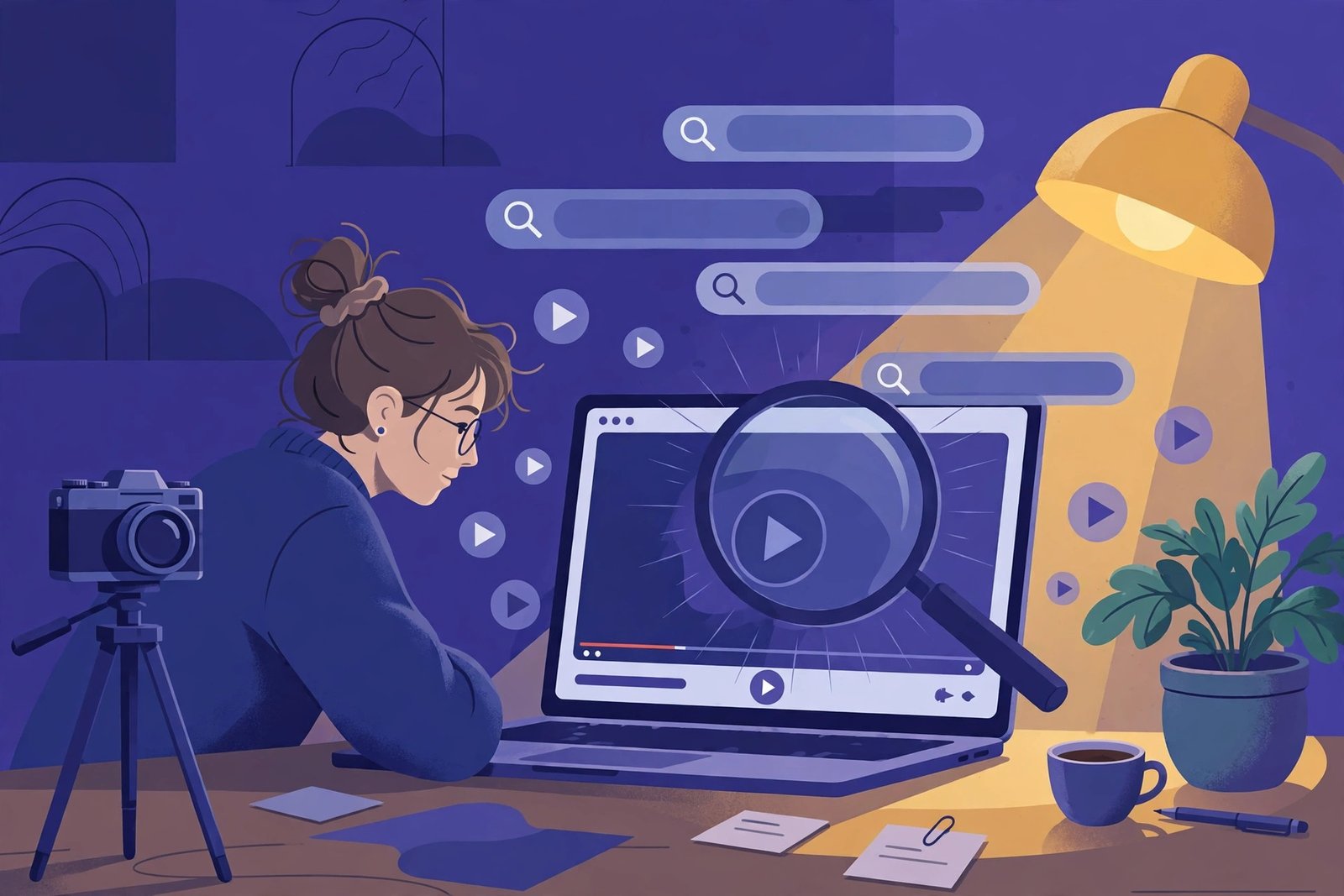
Most new YouTubers treat the platform like a lottery. Upload a video, refresh the analytics, wonder why a stranger's worse video has 400,000 views. Here's the calmer truth: YouTube is two discovery machines bolted together — a search engine and a recommendation engine — and classic 'SEO' only directly controls one of them. Understand both, play to both honestly, and a single good video can keep finding new viewers for years. None of what follows is a hack, a trick, or a promise. It's just how the machine reads you, and how to be worth reading.
This guide is written for small channels: under a thousand subscribers, maybe under a hundred. Everything here works with no budget, no team, and no paid tools. If you've already published a few videos that went nowhere, you'll recognize exactly where the chain broke.
Two discovery machines, one platform
Discovery machine number one is search. Someone types 'how to season a cast iron skillet' and YouTube matches words — from your title, description, chapters, and captions — to their query. Search traffic is slow and durable: a genuinely useful tutorial can pull steady views for three, four, five years. It is the closest thing to compound interest in the creator economy, and it's the half of YouTube where SEO-style work pays off directly.
Discovery machine number two is suggestions: the homepage, 'up next,' and Shorts feeds where YouTube pushes your video to people who weren't looking for it. Here the deciding question isn't 'is this relevant?' but 'will this person keep watching?' The signals are click-through rate on impressions, average view duration, and satisfaction signals like shares, comments, and subscribes-after-watching. This machine is volatile — it can hand you 100,000 views on Tuesday and silence on Wednesday — but it's where most channel growth actually happens.
The honest implication: do the search-side work on every video because it's cheap and permanent, and earn the suggestion-side with retention because it's hard and compounding. Neglect either one and you're flying on one engine.
What YouTube actually measures
YouTube's ranking isn't a mystery box; the company has explained the broad strokes for years. Two buckets: relevance and performance. Relevance answers 'what is this video about?' — your title, description, chapters, captions, and increasingly the spoken words in the video itself, since YouTube transcribes everything you say. Performance answers 'do viewers respond well to it?' — click-through rate on impressions, how long people stay (average view duration and the audience-retention curve), and satisfaction signals: likes, shares, comments, new subscribers that came from that video, and the quiet negative ones like 'don't recommend this channel' clicks.
Notice what's missing from that list: tags (nearly irrelevant as a ranking factor since around 2019), keyword-stuffed descriptions (actively ignored), total subscriber count (a video earns its own impressions — the channel's size barely matters for a single video's fate), and upload frequency as a direct ranking signal (consistency helps you produce more attempts; it doesn't change the algorithm's opinion of you). If an SEO course leads with tags and 'post daily or die,' you're reading folklore. For a calmer look at which numbers actually deserve your attention, our guide to reading analytics without self-deception breaks down the five metrics that survive contact with reality.
Titles that match what people actually type
Your title does two jobs at once: it must match a real search query, and it must earn the click from a human scanning the results. Creators who rank treat it like this — lead with the phrase a viewer would type, then add the human reason to click. 'How to Season a Cast Iron Skillet (First-Timer Method)' beats both 'Cast Iron Skillet Seasoning Tutorial 2026 Ultimate Guide' (reads like spam, ranks like spam) and 'I Ruined My Pan So You Don't Have To' (great for browse, invisible to search). For brand-new channels, the search-friendly title is usually the better bet — search is where small channels can beat big ones, because relevance can outweigh subscriber count.
Finding the phrases without paid tools
- Type your topic into YouTube's search bar and write down the autocomplete suggestions — those are real queries from real people, ordered by volume.
- Open YouTube Studio, go to Analytics, then the Research tab, and type your topic. It shows what your viewers — and YouTube's wider audience — are actually searching for, plus the content gaps nobody is filling well.
- Search the phrase yourself and study the top three results. If you can genuinely answer the question better, or for a more specific audience, you have a video worth making. If you can't, pick a narrower angle.
- Keep a running list. Ten real phrases is a content calendar — and it's exactly how our batching playbook starts every planning session.
One rule that never expires: the title must describe the video. Every mismatch between title and content trains viewers — and YouTube — to distrust you. Clickbait that delivers is just a good title; clickbait that doesn't is ranking poison, as the thumbnail section below explains.
Descriptions, chapters and captions do the quiet heavy lifting
The description's first two or three lines are the only part most viewers ever see — they appear above the fold and in search results — so put the plain-English summary of the video there, naturally including the key phrase once. The rest of the description is for the algorithm and the diligent: a fuller summary, links to resources mentioned, and timestamps. Keyword-stuffing the description (pasting the same phrase twelve times) does nothing; YouTube's systems read for meaning now, and viewers read for trust.
Chapters are the most underrated SEO tool on YouTube. Each chapter title is a mini search entry — Google sometimes surfaces them as 'key moments' in web search — and chapters measurably help retention, because viewers can jump to the part they need instead of leaving. Add them to every video over three minutes: timestamp the main sections, give each a clear descriptive name, and make the first chapter start at 00:00.
Captions matter twice: accessibility for viewers, and a full transcript YouTube's systems can index. Upload your own corrected captions instead of relying on auto-captions alone — it's fifteen minutes of work that pays off in every search your video appears in. Tags? Fill in a few honest ones and move on. Hashtags in the description? Three or four relevant ones at most; a wall of thirty looks desperate and changes nothing.
The thumbnail–retention contract
Here is the deal your thumbnail makes with the algorithm: the thumbnail (plus title) earns the click; the first thirty seconds of the video earn the watch. YouTube watches what happens after the click. If click-through rate is high but viewers bail in twenty seconds, the system concludes the packaging lied — and it stops showing the video. High CTR with low retention is worse than modest CTR with strong retention. The thumbnail is a promise; retention is whether you kept it.
Honest thumbnail craft is simple and repeatable: three elements maximum, one clear focal point (a face with a readable expression still outperforms abstract designs in most niches), strong contrast that survives at the tiny sizes of a phone feed, and at most four or five words of text — large, or not at all. Test by zooming out: if you can't read it at postage-stamp size, redesign it. And never reuse the same visual formula so aggressively that your own catalog becomes wallpaper.
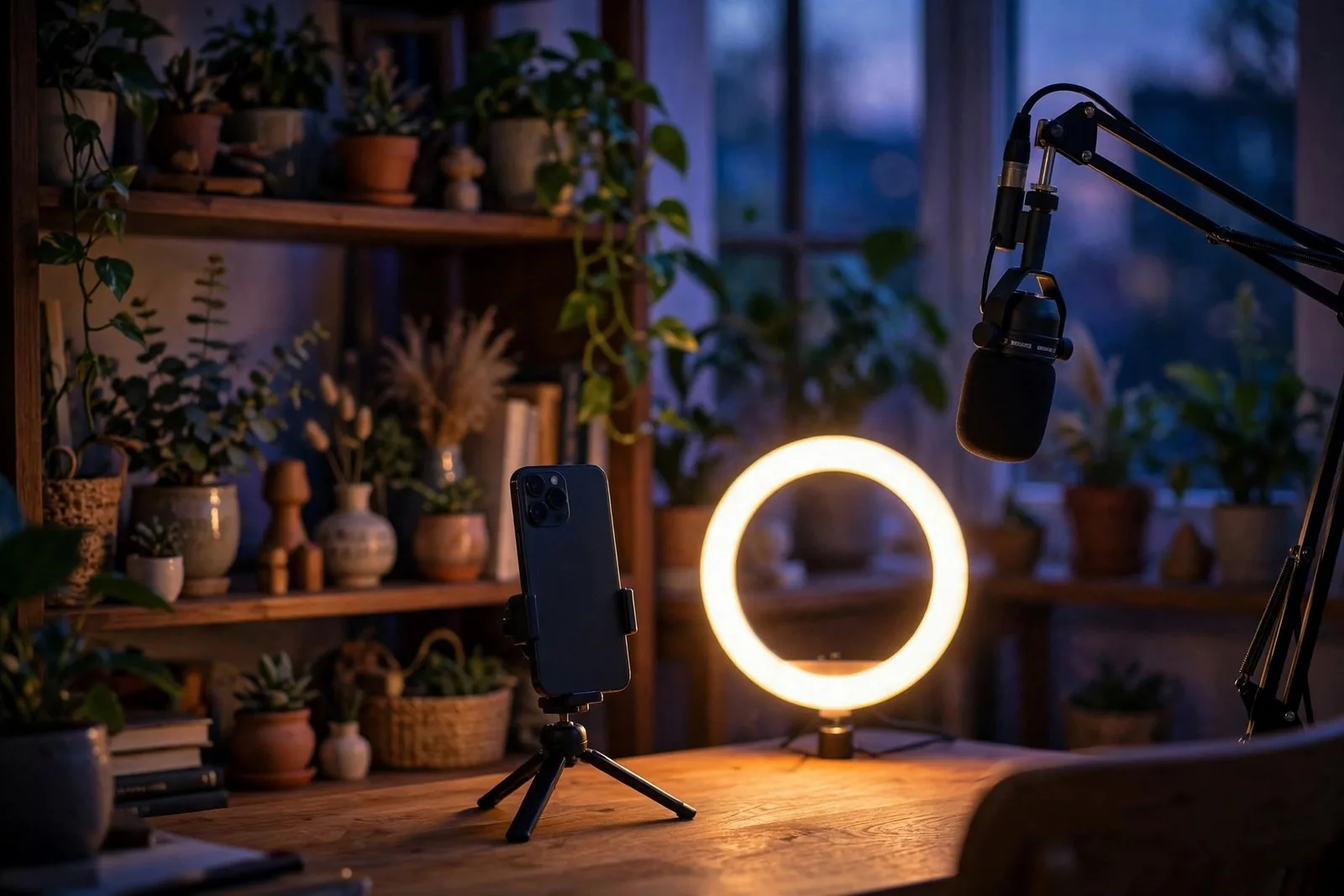
The filming side of the contract matters too. Most new creators shoot on a phone, and honestly, that's enough — a modern phone like the Samsung Galaxy S26 captures sharper 4K than most viewers' screens can show. What actually separates watchable from unwatchable is stability, light, and sound — the same upgrade order as our honest home studio guide. If you film talking-head tutorials or vlogs on the move, a pocket gimbal camera like the DJI Osmo Pocket 3 Creator Combo removes the shaky-hand problem entirely and makes your footage look deliberate — which keeps people watching past the thirty-second mark. And retention is the whole game.
Your first ten videos are a research project
Almost nobody's first videos find an audience, and that's not a verdict — it's the data-gathering phase. Commit to ten videos before you judge anything. Same niche, honest packaging, one searchable topic each. Then open YouTube Studio and read the results like a scientist, not a critic: the audience-retention graph of each video (where exactly do people leave?), the traffic sources (is search finding you at all?), and the search terms already bringing impressions.
What you're looking for is the break point. If impressions are near zero, the packaging isn't matching any real query — fix titles and topics. If click-through is healthy but retention collapses in the first minute, the opening is the problem — get to the point faster, as our guide to writing hooks explains. If one video clearly outperforms the rest, that's your audience voting: make the next three videos its siblings, not its opposites. Ten videos in, you'll know more about your real audience than any guru thread could tell you.
And when the numbers start telling a story you can't quite decode, that's exactly what an AI growth partner is for. Virello's growth agents read your retention graphs and search data alongside you — see how it works and what it costs if you're curious.
Frequently asked questions
How long does it take for a new video to get found in search?
Weeks to months, honestly — and that's normal. YouTube needs real watch data before it trusts a video in results, so search traffic builds slowly, then compounds: the video that gets 40 views in month one can pull 400 a month a year later if the topic is evergreen and the retention is solid. Judge search performance on a six-month horizon, not a six-day one.
Do video tags still matter for YouTube SEO?
Barely. Tags help YouTube disambiguate a few edge cases — common misspellings, very new terms — but they haven't been a meaningful ranking factor for years. Fill in a handful of honest tags and spend the saved time on the title, thumbnail, and first thirty seconds. That's where the ranking is actually decided.
Should I buy views or subscribers to kickstart a new channel?
No — it actively harms you. Purchased views arrive with near-zero retention, which teaches YouTube that your video doesn't satisfy viewers; purchased subscribers never watch, which tanks every future video's early performance metrics. Beyond the algorithm, it's the fastest way to destroy the trust a small channel is built on. Our piece on fake followers and our guide to spotting growth-service scams go deeper on why the shortcut always costs more than it pays.
How often should I upload as a new creator?
As often as you can sustain without the quality floor dropping. For most people starting out, that's one video a week — enough attempts to learn from, not so many that every video is rushed. A rushed video with weak retention teaches YouTube the wrong lesson about your channel; a slower cadence of videos people actually finish teaches the right one. Consistency you can keep for a year beats a heroic month followed by burnout.
The bottom line: YouTube SEO isn't a bag of tricks — it's a readability layer between your video and the machine that recommends it. Match real queries with honest titles, help the system understand you with chapters and captions, keep the thumbnail's promise in the first thirty seconds, and give yourself ten videos of data before drawing conclusions. Do that, and your videos stop depending on luck. They start depending on you — which is the only ranking factor you actually control.